

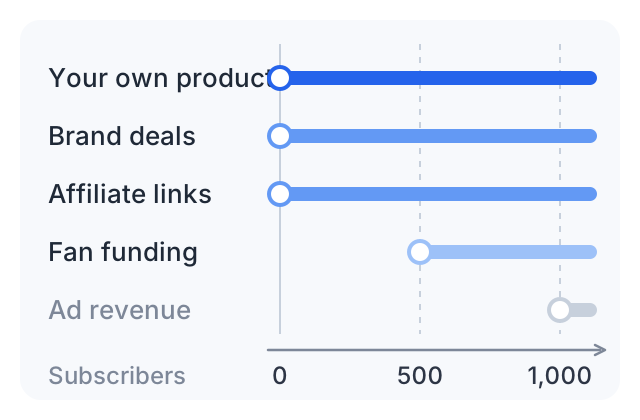
Sponsorships, affiliate links and your own products all earn money on YouTube without the Partner Program. None of them has a subscriber threshold, and none of them needs YouTube’s approval, because YouTube is not part of the transaction.
That is the real difference between these three and everything YouTube pays out itself. Ad revenue and fan funding both measure your audience before they let you earn; a sponsor, an affiliate program or a buyer only asks whether what you offer is worth paying for.
Sponsorships
A sponsor pays you to mention their product in a video. A channel teaching Excel to accountants can approach software companies at 2,000 subscribers; a general lifestyle vlog at 50,000 may be harder to place, because the sponsor cannot tell who is watching.
Who it suits: channels with an obvious, nameable audience and a subject a company sells into.
How to start: write one page a sponsor can read in a minute — who watches you, how many views a recent video got, and two or three products that would fit. Then email the companies whose tools you already use and already mention. Your first deals usually come from this list, not from a marketplace.
The work: each deal is negotiated, scripted, delivered and invoiced separately, and the income arrives in lumps rather than monthly.
What affects earnings: how specific your audience is, how many views a sponsored video reliably gets, and whether the sponsor is selling something expensive. A channel with 3,000 views per video on a niche business topic can be worth more per deal than a 50,000-view channel on a broad one.
Affiliate links
If you already recommend tools, books or materials, those recommendations can carry a tracked link that pays you a commission when a viewer buys. You need the affiliate program’s approval, not YouTube’s, and most are free to join.
Who it suits: review, tutorial and gear channels, where buying something is the natural next step after watching.
How to start: list the products you have recommended in your last ten videos, check which of them run an affiliate program, and add links to those descriptions. Say in the video that the links are affiliate links.
The work: low once the links are in place, but descriptions need maintaining as products and programs change.
What affects earnings: the commission rate, the price of the product, and how close the purchase is to what the video was about. A link to a tool the video spent ten minutes using converts very differently from a general store link. The tradeoff to watch is relevance: an affiliate link viewers see as a genuine recommendation costs you nothing, while links that do not match what you teach tend to be ignored, and may cost some trust. Recommending only what you would recommend anyway keeps that from happening.
Your own products
A course, a template pack, a preset, a set of files. You set the price, you keep what you charge, and nothing about it depends on a threshold.
Who it suits: channels that teach a skill someone would pay to learn properly, in order, rather than in search results.
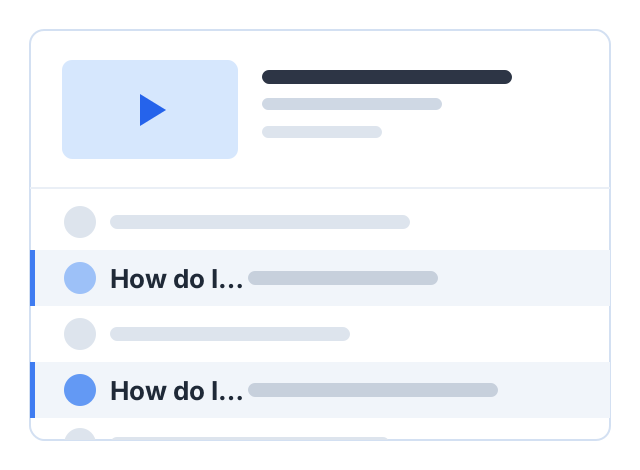
How to start: look at which video brought the most comments asking “how do I…”. That question is what someone would pay to have answered properly. Build the smallest version that answers it completely.
The work: the largest of the three up front, because you have to make the thing. Our course creation checklist breaks a first course into steps.
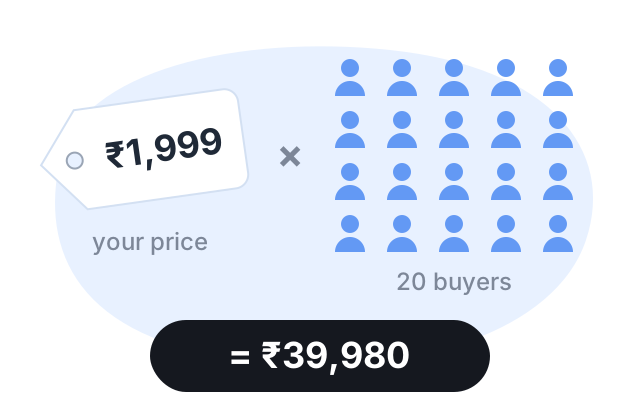
What affects earnings: your price and the number of people who buy. You set the price; the number of buyers you do not control, and it is what makes the arithmetic uncertain. Twenty people paying ₹1,999 is ₹39,980 — a figure worth working out against your own audience rather than treating as typical.
One thing these three do not share: ad and affiliate income both scale with views, so earning more usually means reaching more people. With a product, income can also move when you change the price, improve how many viewers buy, or add something for people who already bought — levers that do not require a bigger audience.
Another way to earn: sell a course
Courselink turns a playlist into a paid course site: paste your YouTube links, the lessons import in order, and students pay into your own Stripe or Razorpay account with 0% taken by Courselink. You can build the course free, but the Free plan cannot sell — paid courses start on Lite at $19 a month, and your own domain on Standard. See pricing for each plan.
Your first month
- Write down who your channel is for, in one sentence naming a person rather than a topic. All three routes get easier once you can say it.
- Read your comments for repeated questions. They tell you what a sponsor’s customers struggle with and what a product would need to cover.
- Pick one route and give it a month. Sponsorships pay first but need selling; a product pays most per buyer but takes longest to build. Running all three at once usually means none of them gets done.
Earning without ads is not the same as earning without the Partner Program
Fan funding — channel memberships, Super Chat, Super Thanks, Shopping — is often described as a way to earn without monetization. It is not. It belongs to the expanded Partner Program, which starts at 500 subscribers with 3 valid public uploads in the last 90 days and either 3,000 qualified watch hours in 12 months or 3 million qualified Shorts views in 90 days. You are still applying to YouTube, and YouTube still takes a share; you are just not waiting for the 1,000-subscriber ad tier. The full thresholds, including the ones changing on February 1, 2027, are in our guide to the monetization rules.
Sources
The Partner Program figures on this page come from YouTube’s own help pages, as of October 2026:
- YouTube Partner Program overview and eligibility
- Overview of the expanded YouTube Partner Program
- Changes to the YouTube Partner Program — the February 1, 2027 thresholds
Earnings examples are arithmetic from a stated price and a stated number of buyers, not averages or forecasts. This page makes no claim about what ads pay, because YouTube publishes no per-view rate. What any channel actually earns depends on its audience, its subject and its price.