

Many well-known teaching channels on YouTube sell courses. Apna College, Chai aur Code, 100xDevs, CA Rachana Ranade, Ankur Warikoo, Ali Abdaal and Thomas Frank all teach free on YouTube and sell a paid, structured version on their own sites.
This guide looks at what each one sells and how they sell it. Every creator and product named here comes from the creator’s own website or YouTube channel. We do not include earnings, because none of these creators publishes their course revenue, and we will not guess it.
Seven creators at a glance
| Creator | YouTube channel | Subject | What they sell | Where |
|---|---|---|---|---|
| Shradha Khapra | Apna College | Coding and placements | Course batches in web development, DSA, placement prep and AI/ML | apnacollege.in |
| Hitesh Choudhary | Chai aur Code | Coding, in Hindi | Cohorts in web development, mobile development and system design | chaicode.com |
| Harkirat Singh | Harkirat Singh | Web development, DevOps, Web3, AI | Cohorts and bootcamps | 100xdevs.com |
| CA Rachana Ranade | CA Rachana Ranade | Stock market and personal finance | Eight courses from beginner to advanced, plus a yearly membership | rachanaranade.com |
| Ankur Warikoo | warikoo | Money, careers, growth | An annual subscription with courses and jobs | webveda.com |
| Ali Abdaal | Ali Abdaal | Productivity and online business | A business academy with mentorship, plus a free intro course | lifestylebusiness.com |
| Thomas Frank | Thomas Frank | Productivity and Notion | A free Notion course, paid courses, Skillshare classes and Notion templates | thomasjfrank.com |
The Indian creators
Apna College (Shradha Khapra)
Apna College teaches coding and placement preparation. The channel description signs off from Shradha Khapra, founder of Apna College, and links to apnacollege.in.
On the site, the courses are sold as named batches: Delta for complete web development, Alpha Plus for DSA in Java or C++, Sigma for placement preparation, and Prime for AI and ML. The channel description links straight to one of the course pages.
The pattern: each paid course has a short, memorable name and one clear outcome. Students know exactly which batch fits their goal.
Chai aur Code (Hitesh Choudhary)
Chai aur Code is Hitesh Choudhary’s Hindi coding channel. Its description says it is “a channel dedicated to chai and coding in HINDI”. The channel links to chaicode.com and to a separate DSA site at dsa.chaicode.com.
ChaiCode’s own site lists cohorts in web development, mobile development and system design, plus interview preparation.
The pattern: a cohort, not a recording. Students join a group that starts together. The free channel builds trust in the teacher’s style, and the cohort adds a schedule and other learners.
100xDevs (Harkirat Singh)
Harkirat Singh teaches web development and engineering. His channel description opens with a clear line: “100xdevs.com is the only official website to purchase our cohorts.”
On 100xdevs.com he sells cohorts and bootcamps in web development, DevOps, Web3 and AI/ML, with some programs online and some on campus.
The pattern: he names one official place to buy. When a course is popular, copies and fake sellers appear. Saying clearly where to buy protects students and the creator.
CA Rachana Ranade
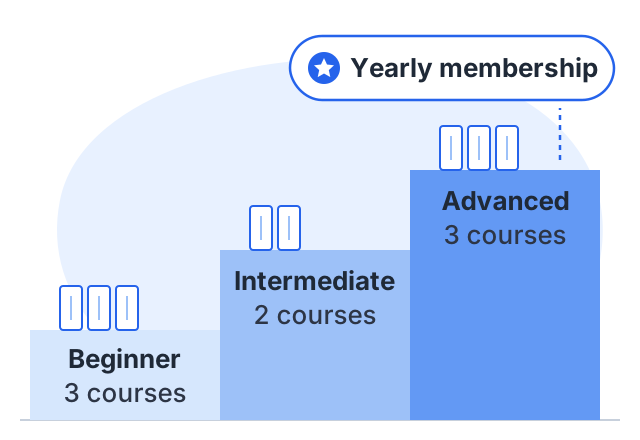
Rachana Ranade, a chartered accountant, teaches the stock market and personal finance. Her channel description is a course catalog. It lists eight courses in three levels:
- Beginner: Mastering Money Management, Basics of Stock Market, Magic of Mutual Funds
- Intermediate: Fundamental Analysis, Technical Analysis
- Advanced: Art of Value Investing, Futures & Options, Decoding Price Action Analysis
It also lists a yearly Pro Investor Membership, and points to rachanaranade.com.
The pattern: a ladder. A viewer starts with a beginner course and moves up. Each course leads to the next, so one buyer can become a long-term student.
Ankur Warikoo
Ankur Warikoo’s channel describes him as an entrepreneur, author and online educator. Both his channel and his own website point to WebVeda, the company he runs. WebVeda sells an annual subscription that includes courses, a members’ area and job listings, and says it launches a new expert course every week.
The pattern: a subscription instead of single courses, with many teachers instead of one. This model needs a team. It shows where course selling can lead, but it is not where most creators start.
The global creators
Ali Abdaal
Ali Abdaal, a doctor turned entrepreneur, makes videos on productivity and building an online business. His Lifestyle Business Academy at lifestylebusiness.com is a program you apply to, with structure, accountability and one-to-one mentorship.
Before that, there is a free step. Links from his YouTube channel lead to The Foundational Principles, a free intro course of seven lessons. It needs no card, and it adds you to his newsletter.
The pattern: a free mini course between the YouTube video and the paid program. It lets viewers try the teaching in a structured form before they pay.
Thomas Frank
Thomas Frank makes videos on productivity and Notion. His courses page says that “99% of the content I create is free”. The free part includes Notion Fundamentals, a full beginner course.
Beyond that, he offers Business 101 for Creators, three classes on Skillshare, and paid Notion templates such as Ultimate Brain and Creator’s Companion. He describes Creator’s Companion as the system he uses to run his own YouTube channel.
The pattern: a free course as the front door, and several paid products of different kinds behind it. Some are sold on his own site and some on a marketplace.
Five patterns worth copying
1. The free videos keep going. Not one of these creators stopped teaching free. YouTube is how new people find them; the course is for viewers who want more.
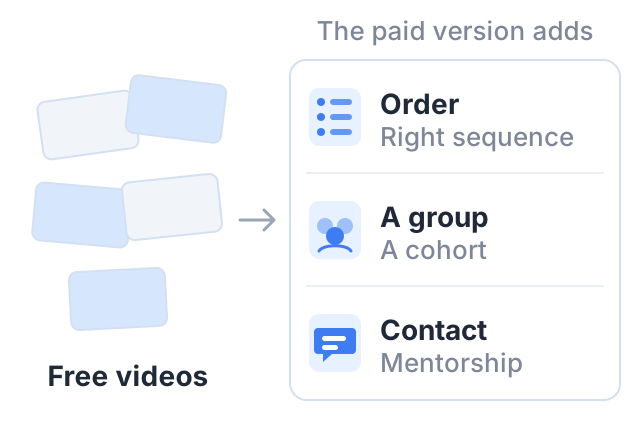
2. The paid version adds something the free one can’t — order, a group, or contact. Selling the same videos with nothing added is a weak offer.
3. One clear link, from the channel to a page they own. Not to a marketplace listing, and not to five places at once.
4. A clear outcome per course. Each name tells a viewer what they will be able to do afterwards.
5. A first step that is easy to take. A free intro course, a beginner level, or a lower-priced first course, with the bigger purchase later. Our guide to the mini course shows how to build that first step from videos you already have.
A worked example: using the patterns on a small channel
Say you run a Tamil channel teaching Excel, with 3,000 subscribers and 40 tutorial videos. You cannot run a cohort of hundreds yet, but the patterns scale down: keep posting free tutorials, pick one outcome (“Excel for your first office job”, 20 lessons in order), add what the free videos lack (practice files, a sequence that builds), put one course link first in your channel profile and descriptions, and set a starter price. At ₹999, 25 buyers in a month is ₹24,975 before payment fees.
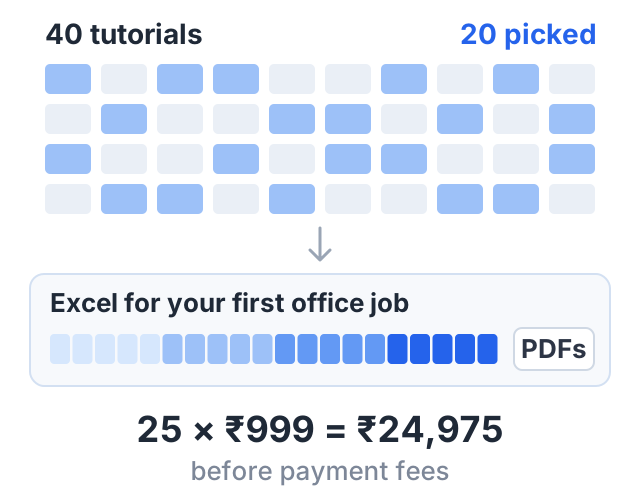
The figure is arithmetic from a price you choose and a number of buyers assumed for the example, not a forecast. What it shows is the size of audience a course needs: 25 buyers, not millions of views.
Another way to earn: sell a course
The creators above built their own course sites, often with a team; you can start with the videos you already have. Courselink imports them as lessons in order, and students pay into your own Stripe or Razorpay account with 0% taken by Courselink. You can build your course free, but the Free plan cannot sell — paid courses and coupons start on Lite at $19 a month, and a custom domain, like the creators above use, on Standard. See the pricing page for every plan.
Sources
Every creator and product above comes from the creator’s own channel or website:
- Apna College and its YouTube channel
- ChaiCode and the Chai aur Code channel
- 100xDevs and Harkirat Singh’s channel
- CA Rachana Ranade’s channel and rachanaranade.com
- Ankur Warikoo’s website, channel and WebVeda
- Lifestyle Business Academy and Ali Abdaal’s channel
- Thomas Frank’s courses page and channel
Products and course names change. Check the creator’s own site for what is on sale today. This page names no earnings for any creator, because none of them publishes course revenue.