

There are six real ways to earn from an Instagram account: brand deals, affiliate links, Instagram’s own programs, selling physical products, selling your own digital product or course, and winning client work. Most accounts that earn well use two or three of them together, and only one of those six depends on Instagram approving you.
That last point is the useful one. Everything on this page except Instagram’s own programs is an agreement between you and a brand, a merchant, a client or a buyer. No threshold, no application, no waiting.
Follower count is the wrong number to optimize
A brand is not buying your follower count. It is buying access to a described group of people who might buy its product. A sponsor can price “4,000 people who cut their own hair at home” far more confidently than “40,000 people who like nice photographs”, because the first one tells them who will see the post and the second one does not.
The same is true of a buyer. Someone pays for your product because they recognize a problem you solved on camera, not because the number under your name is large.
So the number worth watching is not followers. It is whether you can say in one sentence who your account is for, and whether the people who follow you would all nod at that sentence. Everything below gets easier once you can.
Brand deals and sponsored posts
A brand pays you to feature its product in a post, a reel or a story. For most accounts that earn money on Instagram, this is where the money comes from.
Who it suits: accounts with a nameable audience and a subject a company sells into — cooking, fitness, parenting, a trade, a software category, a craft.
How to start: write one page a brand can read in a minute. Who follows you, what a recent post actually did, and three products that would fit naturally. Then email the companies whose products you already use and already show. Your first deals come from that short list, not from a marketplace. Instagram also runs a Creator Marketplace, which it describes as a place “where brands and creators can more easily build branded content partnerships”; availability varies, so check whether it appears in your professional dashboard.
The work: every deal is negotiated, scripted, shot, revised, delivered and invoiced on its own. Income arrives in lumps, not monthly. You also have to label it. Instagram’s guidance is direct: “If you’re getting paid in any form for your content, you’ll need to add a Paid Partnership label”, and it says that applies to non-cash perks too — a gifted product or a free trip counts.
What determines the money: how specific your audience is, how reliably your posts reach them, how expensive the thing the brand sells is, and what usage rights you hand over. Instagram tells creators to negotiate each deal and to bring data — followers, views, likes, comments, shares — to justify a rate. It publishes no rate card, and neither should anyone else.
One rights question is worth money. If the brand wants to run your post as a paid ad — Instagram calls these partnership ads — that is extra usage beyond your own audience, and Instagram’s own creator guidance says you can ask for more pay for it.
Affiliate links and codes
You recommend a product, the link or code you share is tracked, and the merchant pays you a share of what people buy through it. The commission comes out of the merchant’s margin, not out of the buyer’s pocket.
Who it suits: accounts where buying something is the natural next step after watching — gear, tools, books, materials, software, ingredients.
How to start: list the products you have mentioned in your last twenty posts. Check which of them run an affiliate program; most are free to join and approve you in days. Put the links where people can reach them, and say plainly that they are affiliate links.
The work: low once set up, but it decays. Programs change terms, products get discontinued, links break. Someone has to check them.
What determines the money: relevance, almost entirely. A link to the exact tool a post spent two minutes using converts differently from a general store link. Commission rate and product price matter, but a high rate on something your audience has no reason to want pays nothing. The safe rule is to link only what you would have recommended for free.
Instagram’s own monetization programs
Be careful here. Instagram changes these programs often, they are not available everywhere, and a great deal of what is written about them online is out of date. Below is only what Instagram says on its own creator site, as of October 2026. Eligibility and availability vary by country and by account, and the only place that tells you the truth about your own account is the professional dashboard in your app.
Bonuses. Instagram says Bonuses “reward you for the performance of your reels, carousels and single image posts”, and states plainly that they “are limited time and invite-only as we build toward a sustainable program.” You cannot apply for them and you cannot plan around them. If an invitation appears, treat it as a windfall.
Gifts. Fans buy Stars and send them on reels. Instagram describes gifts as “a way for creators to get support from fans who love their content and earn money.”
Subscriptions. A paid members-only tier inside Instagram: subscribers pay a monthly fee you set and see exclusive content marked with a purple ring, plus a badge beside their name. Instagram’s example of its payout timing is the 21st of the following month.
Partnership ads. Not a payout from Instagram at all. A brand pays to run your content as an ad; your money still comes from the brand deal, which is why the extra usage is worth negotiating.
What Instagram does not publish anywhere is a rate. There is no per-view figure, no follower threshold listed on these pages, and no guarantee that a program available to someone else is available to you. Any article that gives you an exact number here is guessing.
Selling physical products
Prints, merchandise, your own baked goods, secondhand gear, a small manufactured product. Instagram’s shopping and product-tagging features have changed repeatedly and are not available in every country, so check what your own account actually offers before planning around it.
You do not need those features to sell, which is the part people miss. Plenty of accounts sell physical goods by sending people to a store of their own, or by taking orders in direct messages and invoicing. That is slower per order but it works from day one and in any country.
What determines the money: your margin after the cost of goods and shipping, and whether you can fulfill orders without the fulfillment eating the time you need for posting. Physical products are the route most likely to turn into a second job.
Selling your own digital product or course
A course, a preset pack, a template set, an ebook, a project file bundle. You set the price, you keep what you charge minus your payment provider’s fee, and nobody approves you first.
Who it suits: accounts that teach a skill, show a process, or solve a problem repeatedly in public. If your replies are full of “how did you do that”, you already have the product.
How to start: find the post that got the most “how” questions. That question is the product. Build the smallest version that answers it completely and sells for a real price, rather than a large version that never ships.
The work: the heaviest up front, because you have to make the thing, and ongoing work to send people to it. Our guide to promoting an online course covers that second half.
What determines the money: your price, and how many people buy. You control the price directly. The number of buyers you do not control, which is what makes every projection here an estimate.
This is the route that pays the most per buyer, because nothing sits between you and them. It is also the only one on this page where improving the product, rather than reaching more people, raises what you earn.
Services and client work
Many accounts that look like they earn from posts actually earn from the work the posts bring in. A photographer books shoots. A designer books brands. A dietitian books consultations. A carpenter books jobs. The account is the portfolio and the proof.
Who it suits: anyone whose skill can be hired by the hour or by the project.
How to start: make it obvious that you are available. Say what you do and who you do it for in the bio, pin a post that shows one job end to end, and answer inquiries the same day.
What determines the money: your rate and how many hours you can sell. The ceiling is your own calendar, which is exactly why creators who start here often build a course later — it sells the same knowledge without costing another hour.
The link problem, and why it shapes everything
Instagram gives a profile only a small number of links, and posts in the feed are not clickable. Everything you want someone to do off Instagram has to travel through the profile, a link in a story, or a direct message. The number of profile links Instagram allows has changed more than once, so check the Edit profile screen in your own app rather than trusting a figure in an article.
Three practical consequences. Send people to one destination at a time, and change it when your focus changes; a profile holding five equally weighted links converts worse than one holding the thing you are actually selling this month. Say the destination out loud in the post, because people do not guess. And own that destination — if the thing you sell lives on a page you control, you keep it when a link feature changes.
A worked example
This is arithmetic from assumptions, not a forecast. The assumptions are stated so you can replace them with your own.
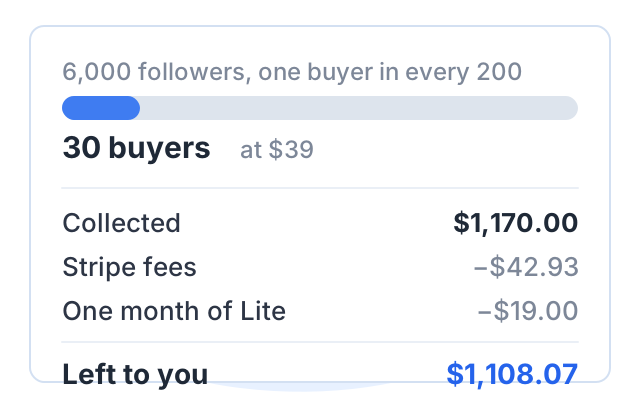
Assume an account with 6,000 followers and a course priced at $39. Assume 1 in 200 followers buys over a launch. That conversion figure is an assumption for the sake of the arithmetic, not a measured rate, and your real figure could be several times higher or lower.
- 6,000 ÷ 200 = 30 buyers
- 30 × $39 = $1,170 collected
- Payment processing, at Stripe’s published standard US card rate of 2.9% plus 30¢ per successful charge (checked October 2026): 30 × ($1.13 + $0.30) = $42.93
- Courselink’s fee: $0, on every plan
- Net to you: $1,127.07, less the $19 Lite plan for that month, so $1,108.07
What this leaves out: income tax, refunds and chargebacks, currency conversion or international card surcharges, any equipment or software you bought, and all the hours spent making the course and the posts that sold it. It also assumes the 30 buyers exist. Change the price, change the conversion assumption, and run it again before you believe any version of it.
Comparing the routes
Ordered by how much of the outcome is in your hands, from most to least. What each one pays depends on your subject, your audience and your rates, and we have no figure for that worth publishing:
- Your own product or course — you set the price, so the amount per buyer is yours to decide. Heaviest up-front work. Depends on nobody’s approval.
- Client work — reliable and immediate, and you can quote a real rate. Capped by your hours. Depends on clients, not platforms.
- Brand deals — can be the largest single payments on this list. Lumpy, and every deal is sold, negotiated and delivered by hand. Depends on brands choosing you.
- Affiliate links — the least ongoing work, and the smallest amount per person. Depends on merchants’ programs and terms.
- Physical products — real money, but margin and fulfillment eat into it. Depends on suppliers and shipping.
- Instagram’s own programs — the only route you cannot plan around, because eligibility, availability and the programs themselves change. Depends entirely on Instagram.
The pattern is simple. The routes nobody has to approve are the ones that take longest to start, and also the ones where the ceiling is yours to raise rather than someone else’s to set. The hub page, make money with what you know, covers the same question for other skills and platforms.
Sell a course on Courselink
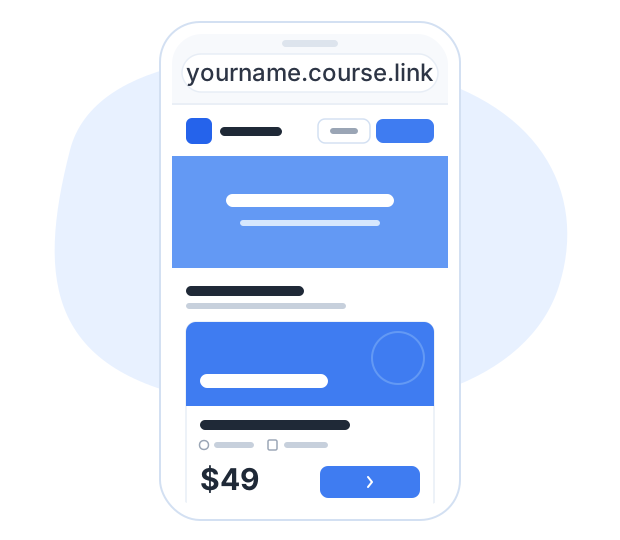
Your clips already prove you can teach. A course is the organized version people pay for: the whole method in order, instead of thirty pieces scattered across a grid. You sell it from the link in your bio, and the money goes into your own payment account.
Courselink builds the course site for you, including lessons that play from YouTube or from video you upload. Selling starts on the Lite plan at $19 a month — the Free plan publishes two free courses but cannot take payments. Courselink takes 0% of your sales on every plan; your payment provider charges its own processing fee. A custom domain comes on Standard. See pricing for the full comparison, and Courselink for Instagram creators for how clips turn into lessons.
Sources
Statements about Instagram’s own programs come from Instagram’s creator site, checked October 2026:
- Earn money on Instagram — the list of programs
- Bonuses — “limited time and invite-only”
- Gifts
- Subscriptions — monthly fee set by the creator, payout timing
- Branded content — the Paid Partnership label, negotiating rates
- Partnership ads
- Creator Marketplace
The payment-processing figure is Stripe’s published standard US card rate of 2.9% plus 30¢ per successful charge, checked October 2026; rates differ by country, card and payment method, so check your own provider’s pricing page.
This page publishes no follower thresholds, no per-view rates and no average earnings for any route, because Instagram does not publish them and nobody else can verify them. The worked example is arithmetic from stated assumptions. What any account earns depends on who follows it, what it sells and what it charges.